Executive Intelligence: The Weaponization of Gratitude
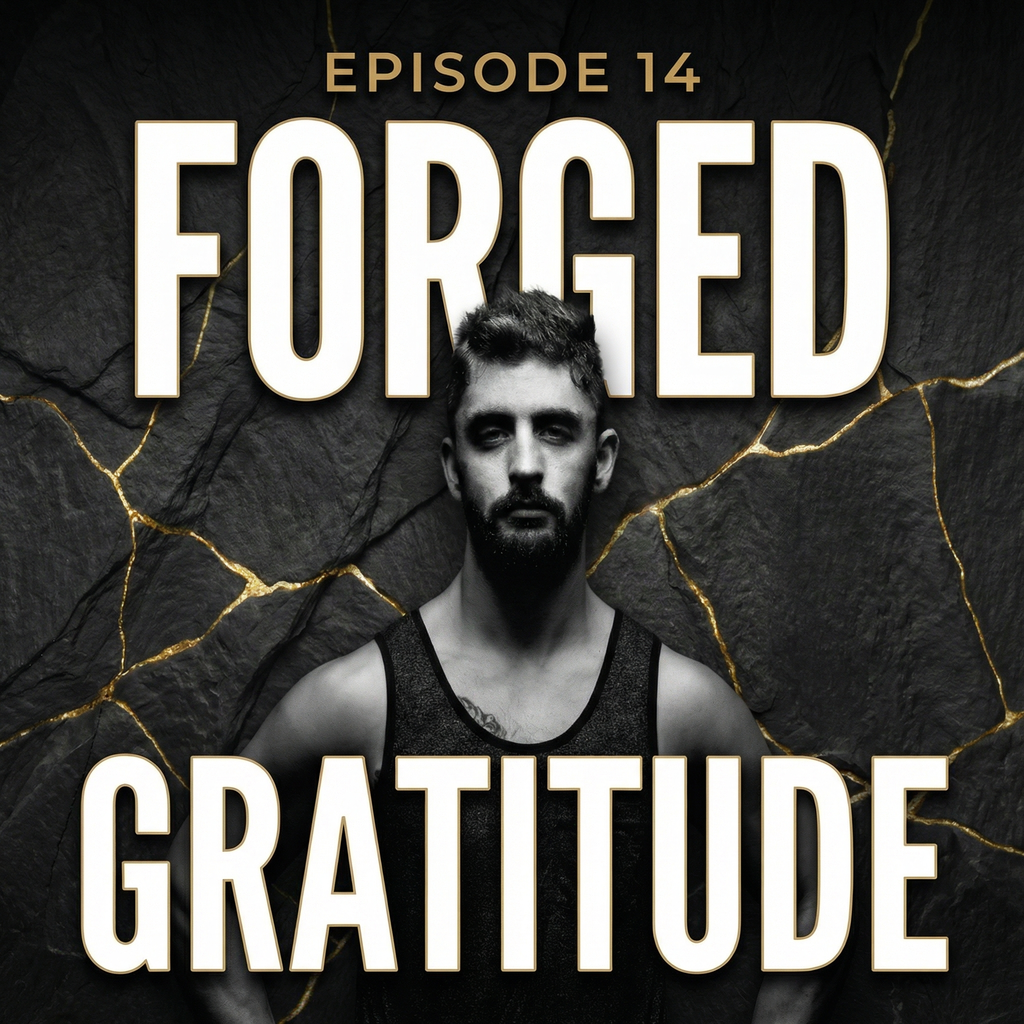
You’re sitting in the boardroom, or perhaps alone in your home office at 3:00 AM. On paper, the metrics are secured. You hold the title. You have the track record of high-stakes execution. The assets are diversified, and the external validation is constant. Yet, the air around you feels dense. There’s a silent drag on your internal operating system. You’re winning professionally, but your kinetic drive is offline.
You didn’t arrive here overnight. You entered this state from quiet recognition, not a sudden emergency. For years, you optimized the portfolio, the team, and the company, but allowed the actual machine running it all to go dormant. The vitality that built the empire is buried under a decade of high-density stress. You are operating, but you are numb. You are functioning, but you are empty.
The market, and often the medical establishment, offer a predictable prescription for this numbness: gratitude. They offer you civilian sentiment. This is soft, passive advice. They tell you to look on the bright side. They tell you to keep a journal and write down three nice things before bed so you can feel better about the life you are currently tolerating.
To an executive standing in the wreckage of a professional detonation - a dissolved partnership, a severed contract, a massive financial loss, or a personal desertion - this version of gratitude isn’t just useless. It’s an insult. When your biological infrastructure is red-lining and your daily capacity is evaporating, you don’t need a sedative to help you sleep through the smoke. You need a weapon to fight your way out of the building.
Civilian Sentiment vs. The Operator's Protocol
Civilian gratitude is entirely reactive. It requires favorable conditions to function. It’s incredibly easy to express thanks when the P&L is green, the market is rising, and the house is quiet. It is a luxury reserved for peacetime. But for the operator, the environment eventually turns hostile. The peacetime metrics inevitably drop.
When the environment shifts and a detonation occurs, the default human reflex is bitterness. Bitterness is the heaviest chain holding high-performers down. It’s not simply a negative emotion; it’s a system-wide toxin. Think of it as an unclosed loop running in the background of your mind. It occupies massive amounts of your daily processing power. It anchors your attention to the past, forcing you to endlessly review the slight, the loss, or the betrayal. Bitterness keeps you in a state of permanent reaction. It guarantees that your future remains offline.
Forged Gratitude is the exact opposite of civilian sentiment. It is a proactive, offensive protocol. It is a deliberate strike against the friction in your life. You do not wait for the smoke to clear to deploy it. You install it while the fire is still burning.
The Extraction Protocol: Reclaiming the System
Rebuilding your physical and mental foundation requires a specific, sequential architecture. You don’t wait to magically feel better. You execute the protocol to force the system back into command. Forged gratitude is the ultimate act of defiance against a situation designed to neutralize you.
Audit the Detonation
You must look directly at the fire. Whether the event was a lost seven-figure deal, a sudden market shift, or an unexpected change in your personal life, you must stop labeling it as a tragedy. You must strip away the emotion and start viewing the event as raw data.
Ask the clinical question: What did this specific event reveal about my current operating system? In almost every case, the detonation did not destroy you; it simply burned away unsustainable habits, misplaced trust, and fragile identity markers. It exposed the exact areas where your edge had dulled. You’re not thankful for the pain. You’re executing a clinical extraction of the tactical asset hidden within the wreckage. You use this data to reclaim the wheel and initiate the rebuild.
Weaponize the Narrative
In the silence of a setback, your brain defaults to a passive narrative. It tells you that you are a victim of market forces or other people's decisions. You must seize the pen and change the programming.
You look at the situation and recognize that the heat of this specific event is forging a version of you that the old version could not even perceive. This is how you restore your command. You are conducting a cold, strategic extraction of lessons. You use them to reactivate the exact traits that made you formidable in the first place. You choose to see the fire not as an end, but as the precise calibration required for your next phase of scale. The event is no longer a setback; it is the prerequisite for your next iteration.
Stabilize the Biological Infrastructure
Forged gratitude triggers a measurable physiological shift. This is the exact point where the software updates the hardware. Sustained bitterness keeps your body locked in a state of sympathetic fight or flight. Your cortisol remains chronically elevated. Your vision narrows. Your sleep architecture degrades, leaving you exhausted before the day even begins.
When you stop reacting to the debris and start architecting the reconstruction, your physical presence returns. You force the body into a parasympathetic state. You drop the cortisol. You lower the resting heart rate. You move out of a biological survival mode and step back into executive sovereignty. You re-architect the machine from the cells up.
The Implication
The fire you are currently walking through was never intended to consume you. It was intended to resurrect the capabilities you buried under years of comfort and performance-seeking.
If you continue to use civilian sentiment to manage an executive-level obstacle, you will remain stagnant. You will continue to experience the 3 PM cognitive crash, the low-level hum of anxiety, and the distinct sense that you are a ghost haunting your own life. You can’t think your way out of a hardware malfunction. You must repair the machine.
If you are ready to stop managing the decline and start the reconstruction, the first step is a diagnostic.
Listen to Episode 14 of The Resurrection Podcast:
Spotify
Apple Podcasts
YouTube
